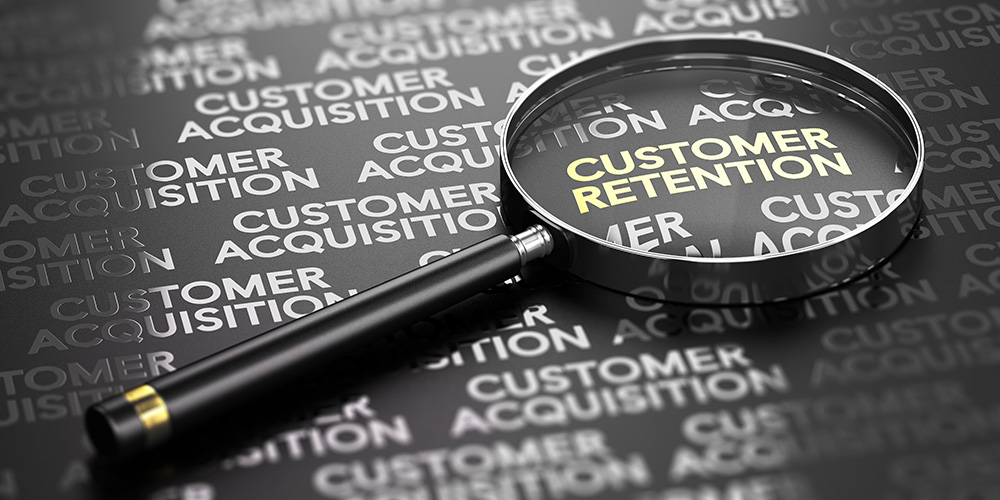
When initially getting a business off the ground, growth is often measured by the ability to attract and win new customers. New sales bring in revenue, create momentum and provide tangible proof that things are moving in the right direction. It is therefore understandable that many small and medium enterprises (SMEs) have historically dedicated a significant amount of their time, energy and resources to new business and customer acquisition.
As a business matures, however, this mindset needs to shift. While attracting new business will always be important, retaining your existing customer base that you have already worked hard to win becomes an invaluable driver of sustainable growth – especially in today’s commercial environment.
The reason is simple. Acquiring new customers is typically more expensive than retaining existing ones. Across both traditional and digital channels, marketing costs are continuing to rise, while consumers have more choices than ever before, and are increasingly willing to switch brands in search of better value or experiences. New customers also generally require significant onboarding effort and investment before they begin generating meaningful value for the business.
Existing customers, on the other hand, are already familiar with the business’s products or services and have demonstrated a willingness to spend money with the brand. The relationship has already been established and the challenge is therefore no longer convincing them to convert, but rather ensuring they continue to see value in returning. This is particularly important for SMEs, where a relatively small group of loyal customers can account for a significant portion of revenue.
Customer loyalty, however, is earned over time and trust can be broken down in an instant. Customers remember whether promises were fulfilled, whether communication was consistent and whether problems were resolved quickly when issues arose. They also come to expect a certain level of service and notice if this suddenly slips.
It’s therefore vital that SMEs continually evaluate whether they are delivering on the value proposition that attracted their customers in the first place. Expectations evolve, customer needs change and competitors are constantly looking for opportunities to gain market share. And businesses that become complacent risk losing customers they have spent years building relationships with.
Importantly, improving retention does not always require substantial investment. In many cases, it comes down to listening more carefully and responding more effectively. Regular customer feedback can provide invaluable insight into changing needs and emerging frustrations. Businesses that actively engage with customers and use feedback to improve products, services and processes are often better positioned to maintain loyalty over time.
There is also a powerful multiplier effect associated with retention. Satisfied customers often become advocates for the business, recommending it to family, friends and professional networks. In an era where word-of-mouth recommendations and online reviews heavily influence purchasing decisions, loyal customers can become one of an SME’s most effective marketing assets.
This creates a virtuous cycle. Strong customer experiences drive loyalty, loyalty drives advocacy and advocacy helps attract new customers at a lower cost.
None of this is to suggest that SMEs should stop pursuing new business opportunities. Sustainable growth will always require attracting new customers and expanding market reach. But the customers you already have may be your most valuable growth asset. In a competitive and uncertain operating environment, protecting and strengthening relationships with existing customers can position your business to weather economic challenges, generate repeat revenue and build a reputation that attracts new customers organically. In many cases, the most effective way to grow the business is to not look further afield, but to deepen the value delivered to the customers you already serve.
About the Author: Jeremy Lang